
Keeping Patients Safe at Home: Quality Care, Emergency Preparedness & Seasonal Health Risks
🏠 HOME HEALTH NEWS & UPDATES
CMS Releases CY 2027 Home Health Proposed Rule:
- CMS released theCalendar Year 2027 Home Health Prospective Payment System proposed rule on July 1, 2026. The proposal includes changes involving payment rates, case-mix weights, functional impairment levels, comorbidity groupings, LUPA thresholds, the Home Health Quality Reporting Program (HH QRP), and the expanded Home Health Value-Based Purchasing Model. The public comment period is scheduled to close August 31, 2026.
 | Why it matters to clinicians:Quality outcomes and accurate clinical documentation continue to be central to the home health model. Accurate assessment, appropriate interventions, measurable goals, and documentation that reflects the patient’s actual condition remain critical. |
|---|
OASIS & Quality Reporting Reminder:
2. CMS released updated Quarterly OASIS Q&As in July 2026, and preview reports for the October 2026 HH QRP refresh are available in iQIES. Agencies should review their performance information and identify areas requiring improvement.
 | Clinical reminder:- If it is assessed, it should be addressed. – If it is a problem, there should be an appropriate intervention. – If there is an intervention, the plan should include a measurable goal. |
|---|
🌪️ TORNADO EMERGENCY PREPAREDNESS
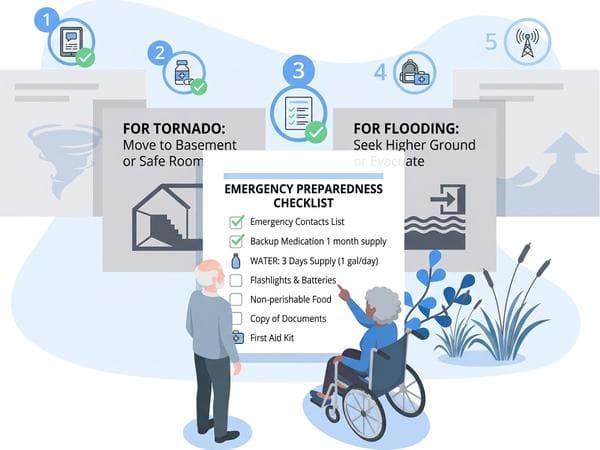
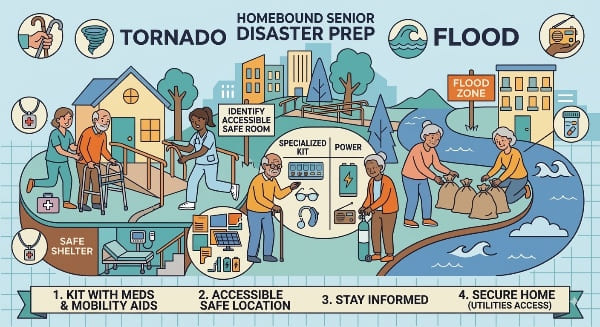
Severe weather can become dangerous within minutes. Home health patients may have additional challenges because of limited mobility, oxygen equipment, medical devices, cognitive impairment, or dependence on caregivers.
The National Weather Service recommends moving to the lowest possible level, away from windows and exterior walls, and placing as many barriers as possible between the patient and the outside.
1. Clinicians should do the ff:
- Do not wait until the tornado is visible before taking shelter.
- Identify the safest room in the home before severe weather occurs.
- Prefer a basement or small interior room on the lowest floor.
- Stay away from windows, doors, and exterior walls.
- Keep emergency supplies accessible.
- Have medications, medical equipment, and important contact information readily available.
- Patients who use oxygen or other essential equipment should have an emergency plan for power failure.
- Patients with mobility limitations should have a realistic plan for getting to the designated shelter area.
Interventions & Goals:
SN INTERVENTIONS
SN will assess the patient’s risk for flooding based on home location, mobility limitations, access/egress, transportation, and dependence on electricity or medical equipment.
SN will instruct patient/caregiver to:
- Monitor local weather alerts.
- Avoid walking or driving through floodwater.
- Keep medications and essential supplies in a waterproof container.
- Have an evacuation/contact plan.
- Maintain adequate medication and medical supply reserves.
- Contact emergency services when immediate danger exists.
- Notify the agency when environmental conditions prevent safe delivery of care.
SAMPLE SN GOAL
Patient/caregiver will demonstrate understanding of the individualized flood emergency plan, including evacuation location, emergency contacts, medication protection, and safe transportation, within 2 weeks.
🌊 FLOODING: DON’T UNDERESTIMATE THE RISK
2. Flooding can create risks that extend beyond property damage. Patients may experience:
- Difficulty obtaining food, oxygen, or other medical supplies
- Unsafe landing area preventing access to medical care
- Loss of electricity
- Medication interruptions
- Contaminated water
- Falls during evacuation
- Exposure to mold or contaminated environments
Interventions & Goals:
SN INTERVENTIONS
SN will assess the patient’s risk for flooding based on home location, mobility limitations, access/egress, transportation, and dependence on electricity or medical equipment.
SN will instruct patient/caregiver to:
- Monitor local weather alerts.
- Avoid walking or driving through floodwater.
- Keep medications and essential supplies in a waterproof container.
- Have an evacuation/contact plan.
- Maintain adequate medication and medical supply reserves.
- Contact emergency services when immediate danger exists.
- Notify the agency when environmental conditions prevent safe delivery of care.
SAMPLE SN GOAL
Patient/caregiver will demonstrate understanding of the individualized flood emergency plan, including evacuation location, emergency contacts, medication protection, and safe transportation, within 2 weeks.
🦠 AUGUST HEALTH ALERT: CYCLOSPORA
What Home Health Clinicians Need to Know:
Cyclosporiasis is an intestinal illness caused by the parasite Cyclospora cayetanensis. The usual symptom is watery diarrhea, although patients may also experience abdominal cramping, nausea, fatigue, loss of appetite, and weight loss.
This is particularly relevant this summer because CDC is investigating a 2026 multistate outbreak associated with iceberg lettuce. As of August 10, CDC reported 13,895 laboratory-confirmed domestically acquired cases, with additional cases still under investigation.
CDC recommends following safe food-handling practices, including thoroughly washing fresh produce under running water. Cooking produce can kill the parasite.
3. What SNs Should Watch For:
During visits, assess for:
- Changes in functional status
Remember that older adults and medically fragile patients may deteriorate more quickly when experiencing significant diarrhea or dehydration. - New or persistent watery diarrhea
- Abdominal cramping
- Nausea or decreased appetite
- Fatigue or weakness
- Weight loss
- Signs of dehydration
- Reduced oral intake
- Changes in vital signs
Interventions & Goals:
SN INTERVENTIONS
- Intervention:
SN will assess GI status, bowel pattern, hydration status, oral intake, weight, and signs/symptoms of dehydration. - SN will educate patient/caregiver regarding proper hand hygiene and safe preparation and handling of fresh produce.
- SN will instruct patient/caregiver to notify the physician of persistent or worsening diarrhea, poor oral intake, weakness, dizziness, or other signs of dehydration.
- SN will monitor patient response to prescribed treatment and communicate significant changes in condition to the physician/care team.
SAMPLE SN GOAL:
- Short-Term Goal:
Patient/caregiver will verbalize at least 3 measures to reduce the risk of foodborne illness within 1–2 weeks. - Short-Term Goal: Patient/caregiver will verbalize at least 3 measures to reduce the risk of foodborne illness within 1–2 weeks.
- Long-Term Goal: Patient will maintain adequate hydration as evidenced by stable vital signs, appropriate oral intake, and absence of clinically significant dehydration throughout the episode of care.

QUALITY STARTS WITH QHA
— Your Partner in Home Health Quality.
Thank you for being part of our commitment to better documentation, stronger compliance, and quality patient care.